Weight Loss Gummies vs Pills: Which Format Actually Wins?
Weight loss gummies vs pills — which format is better?
Neither format is automatically better. Pills fit higher active doses in a smaller serving, while gummies win on taste and daily adherence, which is what actually drives results. The deciding factors are the labelled active amount per serving and whether you will genuinely take it every day.
- Dose: pills hold more active per piece; gummies often need a two or three gummy serving to match.
- Adherence: a format you enjoy is one you keep taking, and consistency beats potency you abandon.
- Label: compare active amount per serving and added sugar per serving before you judge either format.
Stand in front of the supplement shelf and the same small decision keeps repeating itself: the colourful jar of chewables, or the plain bottle of capsules. The weight loss gummies vs pills question feels like a taste preference, but it quietly decides something more important than flavour. It decides whether the bottle you buy this month is still being used next month. Format is not a cosmetic detail. It is one of the biggest predictors of whether you take a supplement long enough to find out if it does anything for you at all.
This guide compares the two the honest way, on the things that actually change outcomes: how much active ingredient each format can carry, how added sugar factors in, how absorption really works, and the adherence gap that most comparison charts leave out entirely. By the end you should be able to pick up any label, in either format, and tell whether you are buying a useful daily dose or an expensive habit. Jelly Force sits firmly on the gummy side of this line, and we will be just as plain about what that costs it as about what it buys.

Weight loss gummies vs pills: what actually differs
Strip away the packaging and there are only four honest points of difference between a gummy and a capsule for weight management, and none of them is magic. The first is capacity. A capsule is a small container you swallow whole, so it can hold a dense powder at a high dose. A gummy has to remain chewable and palatable, which limits how much active material fits in one piece before texture and taste fall apart.
The second is the carrier. Capsules are usually just the active plus a little filler. Gummies need pectin or gelatin, water, and something to make them taste like anything other than the raw ingredient — which frequently means sugar or a sugar alcohol. The third is absorption, where the differences are smaller than marketing implies. And the fourth, the one that decides most outcomes, is whether you actually take it. Hold those four in mind and almost every claim in this category sorts itself out.
The adherence factor most comparisons ignore
Here is the uncomfortable truth that undermines half the "pills are stronger" arguments: the best supplement is the one you finish. A pill delivering a textbook dose does nothing sitting in a cupboard because you keep forgetting the evening one, or because swallowing capsules makes you gag, or because the bottle simply dropped out of your routine. A gummy you look forward to, kept next to the coffee machine, gets taken. Day after day. That consistency is not a soft, feel-good benefit — it is the mechanism. Almost every ingredient studied for appetite or weight support was tested on people taking it every single day for weeks or months, not on people taking it three times a fortnight.
So when someone asks whether they should choose a gummy or a pill, the sharper question is: which one will still be in your hand on day forty? For a large share of people the honest answer is the gummy, and that is not a trivial edge. It is the difference between a fair test and no test at all. If you want the deeper version of this argument applied to a specific nutrient, our breakdown of how glucomannan fiber supports appetite control shows why the daily-dose habit matters more than the headline milligram number.
Objection 1: "Gummies are just candy with a health label"
This is the most common myth, and it is half right, which is what makes it stick. A badly formulated gummy really can be candy with a sprinkle of something active and a wellness claim on the front. But that is a formulation problem, not a format law. The way you tell the two apart is not the shape of the product — it is the supplement facts panel. A serious gummy lists a named active at a real amount per serving and keeps the sugar modest. A gummy pretending to be a supplement lists a large sugar figure, a proprietary blend, and an active dose so small it is doing decorative work.
The fix for this objection is a habit, not a preference: read the milligram column before the marketing column. If a gummy names its actives, states the amount per serving, and the sugar per serving is low, the "just candy" complaint does not apply to it. If it hides its actives in a blend and leans on sweetness, the complaint is correct — and it would be correct about a badly made pill too.
Objection 2: "Gummies never have enough active ingredient"
Often true, sometimes not, and worth understanding rather than repeating. The space constraint is real: you genuinely cannot fit several grams of a bulky fibre into a single palatable gummy the way you can pack it into a capsule or a stick pack. For a handful of ingredients that need gram-scale doses, a pill or a powder is simply the better vehicle, and no amount of clever formulation changes that arithmetic.
But most gummy formulas answer the space problem the obvious way: they make the serving more than one gummy. A two or three gummy daily serving multiplies the room available, which is why the number that matters is always the amount per serving, not per gummy. Read a gummy label the way you would read a pill label — find the serving size first, then the active amount for that serving — and the format stops being mysterious. Plenty of ingredients used for appetite support work at amounts that fit comfortably inside a two gummy serving, which is exactly why the format is viable for that use at all.
Pick the format you will actually keep taking
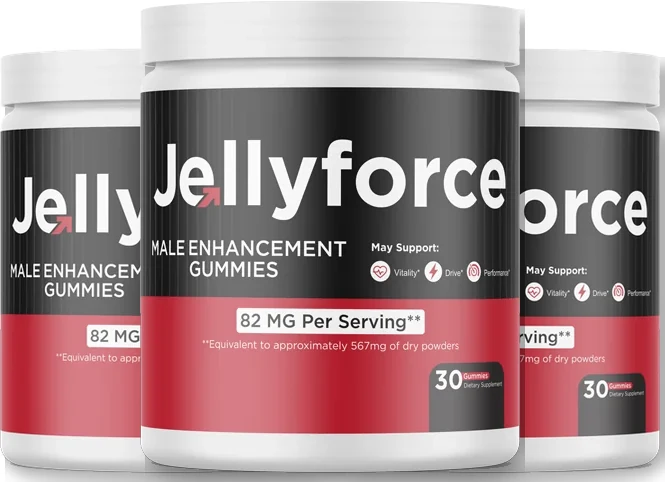
Consistency is the whole game. If a daily chewable is the one you will not skip, that is the one worth buying. Our Jelly Force page lays out its named botanicals and the amount per serving, and the official store publishes the current pricing and guarantee terms in full.
See The Official StoreObjection 3: "Pills are stronger, so pills always win"
Strength on a label and results in a body are not the same measurement, and conflating them is the error hiding inside this objection. Yes, a capsule can carry a higher dose per piece. That advantage is real and it matters for the specific ingredients that need a large dose. But "stronger per capsule" only converts into "better outcome" if the person keeps taking the capsule at the full dose for the full duration — and that is precisely where pills leak users. A slightly lower gummy dose taken every day for three months can quietly beat a higher pill dose taken erratically for three weeks and then abandoned.
There is also a quieter point. Higher is not automatically better even when it is tolerated. Most appetite and weight-support ingredients have a sensible range, above which you get more cost and more chance of digestive complaints rather than more benefit. The goal is a dose inside the studied range that you take reliably, not the largest number the format can physically hold. Judged that way, the "pills always win" claim collapses into "pills win when the higher dose is both necessary and actually consumed" — a much narrower and much more honest statement.
| Factor | Gummies | Pills / capsules | Who it favours |
|---|---|---|---|
| Active dose per piece | Lower; often uses a 2–3 gummy serving | Higher; dense powder per capsule | Pills for gram-scale actives |
| Added sugar / sweetener | Usually some, varies widely | Typically none | Pills on sugar; check the gummy label |
| Taste and ease of taking | Enjoyable, no water needed | Neutral; some struggle to swallow | Gummies for pill-averse users |
| Daily adherence | High for many people | Lower when the routine slips | Gummies, for most real routines |
| Absorption in healthy adults | Comparable for most actives | Comparable for most actives | Roughly a tie |
| Cost per active milligram | Often higher | Often lower | Pills on pure price |
The most useful way to read this table is top to bottom, then ask one question: given how I actually live, which column describes a bottle I will finish? That answer matters more than any single row in isolation.
What about absorption? The overstated difference
Gummy marketing sometimes implies chewables are absorbed better because they start breaking down in the mouth. Pill marketing sometimes implies capsules are more "serious" and therefore more bioavailable. For most common weight-support ingredients in healthy adults, both claims are overstated. Once a nutrient reaches the small intestine dissolved, the body does not care much whether it arrived as a chew or a capsule. Where absorption genuinely differs, it is driven by the specific ingredient's chemistry and whether it is taken with food, not by the format wrapper around it.
The one absorption-adjacent point that is real for gummies is stability. Heat, moisture and time are harder on a gummy than on a dry capsule, which is why a quality gummy should overage its actives and be stored away from a hot windowsill. That is a storage instruction, not a reason to reject the format. Treat it the way you would treat any perishable and it is a non-issue.
Where Jelly Force fits in this comparison
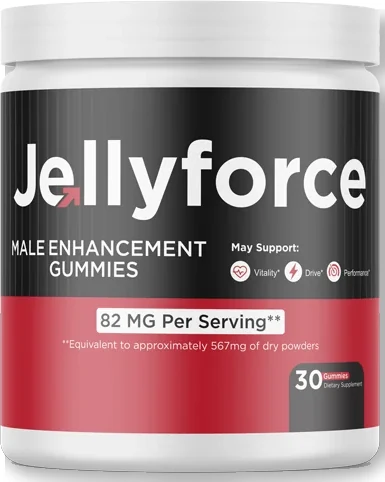
Jelly Force is a gummy, and it is built for the adherence side of this whole argument. The pitch is not that a chewable is chemically superior to a capsule — it is that a daily gummy you enjoy is a daily gummy you take, and a supplement only gets to work if it is actually taken. That is a defensible reason to choose the format, and it is the reason we lead with. It is also why the honest caveat matters: because it is a gummy, you should read the amount per serving and the sugar per serving rather than assume the format did that work for you.
We publish the arithmetic openly. If you want to see which named botanicals in the formula carry human evidence and which are there mainly for the label, the full Jelly Force ingredients breakdown goes ingredient by ingredient, and if your instinct is to check for red flags first, our honest Jelly Force legitimacy and scam check looks at the seller, the guarantee and the claims before you spend a cent. Neither page pretends a gummy is something it is not.
How to read either label before you buy
- Find the serving size first. One gummy or three? One capsule or two? Every other number on the panel is meaningless until you know what a serving is.
- Read the active amount per serving. This is the number that matches what studies were run on. Compare it, in either format, against a sensible reference range for that ingredient.
- Check the sugar per serving on gummies. A few grams is normal; a large figure means you are buying confectionery. Sugar-free versions use sugar alcohols, which suit some stomachs and not others.
- Reject proprietary blends where you can. A blend that gives one combined weight for several actives has told you nothing about the dose of the one you care about.
- Match the format to your real routine. Be honest about whether you will swallow capsules twice a day for months. If not, a once-daily chew you will not skip is the stronger practical choice.
Those five checks work identically on a gummy and a pill, which is the whole point: the label decides quality, the format decides adherence, and you need both to be right. If you are weighing this because appetite is your main lever, it is worth reading which appetite suppressant supplements actually have evidence behind them before you commit to any format at all.
What neither format can do, stated plainly
- No supplement, gummy or pill, treats, cures or prevents any disease. Weight-support products may help with appetite or routine at the margins; they are not a substitute for medical care or a treatment for obesity or any other condition.
- Format does not replace a calorie deficit. Neither a gummy nor a capsule causes weight loss on its own. They sit alongside food changes and movement; they do not stand in for them.
- A nicer format is not a licence to expect more. Enjoying a gummy does not make its actives stronger. The dose is the dose, whatever it tastes like.
- Results vary and take time. Anything worth taking works slowly and modestly. A format that promises fast, dramatic change is selling the promise, not the ingredient.
- Talk to a clinician first if you are pregnant, nursing, taking medication or managing a health condition — that advice is format-blind and applies to both jars on the shelf.
See the current Jelly Force price
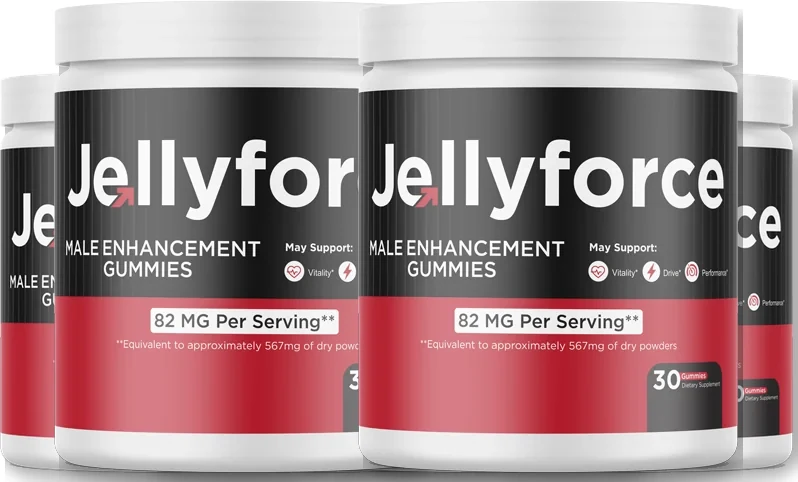
Official store pricing, free US shipping on 3 and 6 bottles, and a 60-day money-back guarantee. If a daily gummy is the format you will genuinely stick with, this is where to check the current bundle and terms.
Order NowFrequently asked questions
Are weight loss gummies as effective as pills?
They can be, but effectiveness depends on the dose per serving and whether you take it consistently, not on the format itself. A gummy with a meaningful active amount that you enjoy taking every day can outperform a stronger pill you forget by Wednesday. Always compare the labelled active amounts, then compare how likely you are to keep taking it.
Do gummies have less active ingredient?
Often, but not always. Gummies have limited room per piece, so high-dose actives such as several grams of fibre are hard to fit without a large serving. Many brands solve this with a two or three gummy serving. Read the supplement facts panel for the amount per serving rather than assuming the format alone tells you the dose.
Are gummy supplements worth it?
They are worth it when the format is the reason you actually stay consistent, because consistency is what drives results with any supplement. They are poor value if you are paying gummy prices for a token active amount hidden behind added sugar. Check the active dose per serving against the sugar per serving before deciding.
Is Jelly Force a gummy or pill?
Jelly Force is a gummy. It is designed to be taken daily as a chewable rather than swallowed as a capsule, which suits people who dislike pills or forget them. As with any gummy, check the supplement facts panel for the active amount per serving so you know what each daily dose delivers.
Related reading
References
- NIH Office of Dietary Supplements — Dietary Supplements for Weight Loss
- NIH Office of Dietary Supplements — Dietary Supplements: What You Need to Know
- U.S. FDA — Questions and Answers on Dietary Supplements
- NHS — Healthy Weight and Weight Management
- PubMed — Dosage form and adherence, randomised evidence