Gut Health Supplements Glutamine and Gut Permeability
Quick answer
Glutamine is the preferred fuel of the cells lining the small intestine, and human trials have measured it against intestinal permeability markers — but almost entirely in stressed populations such as critically ill patients, post-surgical patients and endurance athletes, at gram-scale doses. The evidence that a healthy adult with vague digestive complaints will notice anything from a glutamine supplement is limited, and the doses used in research are not achievable in a capsule or a gummy.
- The mechanism is real: enterocytes use glutamine as a primary energy source.
- The studied populations are unusual: illness, surgery, burns, heat-stress exercise.
- The dose is the catch: trials run in grams per day, not milligrams.
Glutamine occupies an odd position on the gut shelf. Unlike most ingredients in the category, its mechanism is not speculative and its research base is not trivial. There are controlled human trials, measurable endpoints and a physiological rationale that predates the supplement industry by decades.
And yet the honest conclusion for most people searching for gut health supplements glutamine information is still a shrug. Working out why requires looking at who was studied, what was measured, and how much was given — the three questions that decide whether a study result belongs to you.
Why the intestine cares about glutamine specifically
Most cells in the body run primarily on glucose. The enterocytes lining the small intestine are unusual in that they consume glutamine heavily as a fuel, and they do it first — a large share of dietary glutamine is used by the gut wall before the rest ever reaches circulation.
That matters because the intestinal lining renews itself extraordinarily quickly, replacing its surface over a matter of days. Rapid turnover is energetically expensive. A tissue that rebuilds itself continuously and prefers a specific fuel is a plausible place for that fuel to become limiting when the body is under enough stress.
Glutamine is also a substrate for glutathione synthesis and for nucleotide production, both of which matter to a tissue in constant repair. None of this is contested. It is textbook cell biology, and it is the entire reason the ingredient was investigated.
What gut health supplements glutamine trials actually measured
The word used most often on product pages is leaky gut. It is worth being precise here, because the imprecision is doing work for the seller.
Leaky gut is not a recognised clinical diagnosis. Intestinal permeability, by contrast, is a real and measurable property, usually assessed by giving a person two sugar probes of different molecular sizes and measuring the ratio that appears in urine, or by measuring blood markers associated with barrier disruption. Higher permeability is observed alongside several conditions. Whether it causes them, results from them, or simply accompanies them is genuinely unresolved.
So when a trial reports that glutamine improved a permeability ratio, it has reported a change in a biomarker. Whether that change made anyone feel better is a separate question, frequently unmeasured, and it is the question a shopper actually cares about. This is the gap that most gut health supplements glutamine marketing steps over without comment.
Who the studies were done in
The population matters more here than in almost any other supplement literature, because the strongest findings come from people in states most readers are not in.
- Critical illness, major surgery and severe burns. These are the settings where glutamine has been studied most seriously, often given intravenously and under clinical supervision. Results across large trials have been mixed, and one influential multicentre study in critically ill patients reported worse outcomes with high-dose supplementation — a reminder that more is not automatically better in acutely ill people.
- Endurance exercise in the heat. Prolonged exertion raises gut permeability measurably. Several small studies have given glutamine beforehand and reported reduced permeability markers afterwards. Sample sizes are small and endpoints are biomarkers.
- Irritable bowel syndrome after infection. A narrower research line has examined glutamine in people whose symptoms began after an episode of gastroenteritis. Findings have been reported but the literature is small and needs replication before anything firm is said.
- Healthy adults with everyday digestive complaints. This is the group buying most of the product, and it is the group with the least research behind it.
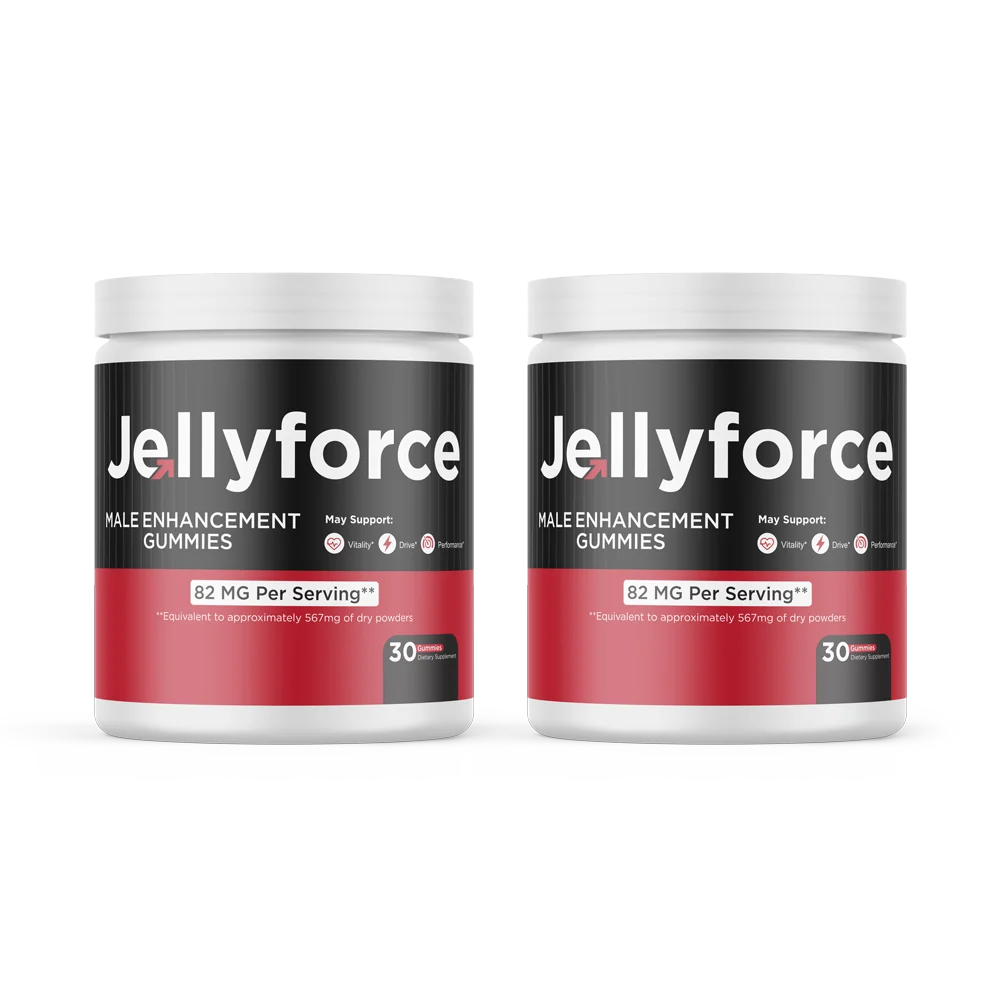
The same label check, applied to Jelly Force
Milligrams before marketing, every time. Our Jelly Force page sets out what each named botanical has been shown to do in humans and where the evidence stops. If you are comparing where to buy supplements of this type, the official store carries the current terms.
See The Official StoreThe dose problem, in numbers
Here is the part that decides the practical question. Human glutamine studies work in grams. Depending on the population and the endpoint, oral protocols commonly sit somewhere between five and thirty grams a day, sometimes split across servings. Five grams is 5,000 milligrams.
Amino acids are bulky, and there is no way around that. A gram-scale dose arrives as a powder stirred into water or as a considerable stack of capsules, because that is the only physical format that holds it. A confection weighing a few grams in total, most of it sugar and gelling agent, cannot carry a clinical amino acid dose. Neither can a single capsule in a blend.
| Format | Typical amount per serving | Servings to reach a low studied dose | Practicality | Evidence match |
|---|---|---|---|---|
| Bulk powder | Grams, measured by scoop | One | Cheap and unglamorous | Matches studied range |
| Single-ingredient capsules | Several hundred milligrams to about a gram | Roughly five to ten | Workable but tedious | Can match with effort |
| Glutamine inside a multi-ingredient gut blend | Often undisclosed within a proprietary blend | Not determinable | Unknowable | No |
| Gummy or chewable | Hundreds of milligrams across all actives combined | Impractical | Not achievable in the format | No |
| Clinical intravenous glutamine | Set by protocol | Not applicable | Hospital setting only | Matches, but not a consumer option |
| Dietary protein | Grams daily from ordinary food | Already achieved | Free | Baseline for most healthy adults |
An ingredient can have a real mechanism, a real research literature and a real dose-response relationship, and still be useless on the label in front of you. The mechanism belongs to the molecule. The result belongs to the dose.
This is the same arithmetic we set out for a different amino acid in our piece on L-arginine and the dose gap, and it applies unchanged. When you see an amino acid named on a blended label in the hundreds of milligrams, it is there for the name.
The last row of the table deserves its own paragraph
Glutamine is the most abundant free amino acid in the human body. Healthy adults synthesise it continuously, and dietary protein supplies more on top — meat, fish, eggs, dairy, legumes and wheat protein all contain it in quantity. For a healthy person eating adequate protein, the notion of a glutamine shortfall is difficult to support.
The situations where glutamine becomes conditionally essential, meaning the body can no longer make enough, are the situations the research studied: severe trauma, major burns, critical illness, sustained extreme exertion. That is why the evidence looks the way it does. It is not an accident of research funding. It is where the physiology actually changes.
What this cannot do, stated plainly
- No dietary supplement treats, cures or prevents any disease. Glutamine does not treat irritable bowel syndrome, coeliac disease or inflammatory bowel disease, and it should not be used in place of care for any of them.
- It cannot fix something that has not been established as broken. Permeability is a marker, not a diagnosis, and changing a marker is not the same as changing how you feel.
- Biomarker improvements do not guarantee symptom improvements. Most of the positive glutamine findings are biomarker findings. That distinction is the single most important thing to hold on to in this category.
- More is not safer. High-dose supplementation in critically ill patients has been associated with worse outcomes in at least one large multicentre trial. In a hospital bed, this is a clinician's decision, not a consumer one.
- Some people should ask first. Glutamine metabolism generates ammonia. Anyone with liver impairment, kidney impairment or a seizure history should speak to a clinician before supplementing.
- It is not a weight management ingredient. It appears on some products marketed that way, and the digestive research does not support that use at all.
How to judge a glutamine product in ninety seconds
- Find the amount per serving. If it is under a gram, the product is not delivering a studied dose. That single check resolves most of the shelf.
- Reject proprietary blends. If glutamine sits inside a blend with one combined weight, the amount is unknowable and therefore unassessable.
- Prefer plain powder if you are serious. It is the format the research used, and it is the cheapest way to reach the studied range.
- Ignore the word leaky. Its presence on a label is a reliable indicator that the page is selling ahead of the evidence.
- Check for third-party testing. Identity and purity verification is the minimum standard worth paying for.
Applied consistently, those five checks will filter almost everything marketed as the best gut health supplement for leaky gut down to a much shorter and much duller list — which is generally what happens when you insist on dose. The same filter applied to the enzyme shelf produces a similar result, as we set out in our piece on digestive enzymes beyond diagnosed deficiency.
The balanced summary
Glutamine is one of the better ingredients in the gut category, and that is a statement about the category as much as about glutamine. The mechanism is sound, the human trials exist, and the safety profile at ordinary doses is reasonable for most healthy adults.
What it lacks is evidence that it does anything noticeable for a healthy person with everyday digestive complaints, which is the person most of the marketing addresses. If you want to test it anyway, buy the format that fits the dose, give it a defined window, and be prepared for the most likely answer, which is nothing obvious. Knowing that in advance is what separates an experiment from a purchase you have to justify afterwards.
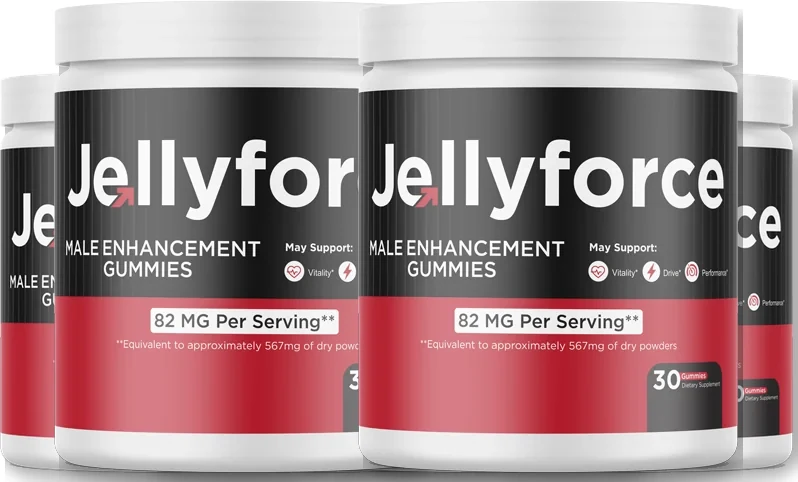
See the current Jelly Force price
Official store pricing, free US shipping on 3 and 6 bottles, 60-day money-back guarantee. We publish the milligram arithmetic next to the ingredient evidence, not instead of it.
Order NowFrequently asked questions
Does glutamine repair a leaky gut?
Leaky gut is not a recognised medical diagnosis, so nothing can be said to repair it. Intestinal permeability is a measurable property, and glutamine has been studied against permeability markers mostly in stressed populations such as critically ill, post-surgical and endurance-exercise groups. Evidence in otherwise healthy adults with digestive complaints is limited.
How much glutamine did the human studies use?
Clinical and sports studies generally work in grams per day rather than milligrams, commonly in the range of five to thirty grams depending on the population and the endpoint. That is a powder dose. A capsule or a gummy containing a few hundred milligrams of total actives is not delivering it.
Is glutamine safe to take as a supplement?
Oral glutamine is generally well tolerated by healthy adults at commonly used doses. People with liver or kidney impairment, anyone with a history of seizures, and anyone taking medication that affects ammonia handling should ask a clinician first, because glutamine metabolism produces ammonia.
Should I take glutamine if I have no symptoms?
There is no good reason to. Glutamine is the most abundant free amino acid in the body and healthy adults eating enough protein already make and consume a large amount of it daily. Supplementation research is concentrated in situations of unusual physiological stress, not in healthy people looking to optimise.