Gut Health Supplements Eczema Research: What It Shows
Quick answer
For eczema that already exists, the evidence behind gut health supplements is weak: pooled analyses of probiotics have generally found little or no meaningful improvement in symptom scores compared with placebo. The more interesting signal sits in early-life prevention research, where specific strains given to mothers late in pregnancy and to infants have produced mixed but occasionally positive results, and where nothing transfers cleanly to an adult buying a capsule.
- Treatment evidence: generally negative or too weak to act on.
- Prevention evidence: mixed, strain-specific, and about infants rather than adults.
- Practical read: no supplement is a treatment for any skin condition, and a label naming only a genus tells you nothing about which trial it borrows credibility from.
The gut and the skin get talked about together constantly, and the reason is not marketing invention. There is a genuine research field here, with genuine biology behind it. What has happened is that a real but modest and inconsistent body of evidence has been compressed into a much simpler sales claim on the way from the journal to the product page.
This piece separates the two. What the trials set out to measure, what they found, where they disagree, and what a bottle on a shelf can honestly say about any of it. Most people searching for gut health supplements eczema answers want one thing settled first: will a capsule change my skin. That is the question the treatment literature was built to answer, and it answers it fairly clearly.
Why the gut keeps coming up in conversations about skin
Atopic dermatitis, the medical name for the most common form of eczema, is an immune-mediated condition with a strong barrier component. The skin barrier leaks moisture and lets irritants in, and the immune system responds in a way that keeps the cycle going. Genetics matter a great deal. So does environment.
The gut enters the picture because a large share of the body’s immune tissue sits along the intestinal wall, and because the microbial community living there is in constant conversation with it. In early life especially, that conversation appears to shape how the immune system learns to tell a threat from a harmless protein. This is why researchers asked the question in the first place. It is a sensible hypothesis, not a stretch.
What follows from a sensible hypothesis, though, is a study, and studies are where the interesting part happens. The gut-skin idea has been tested many times. The results are not what the category’s advertising implies.
What gut health supplements eczema trials actually measured
There are two entirely different research questions hiding under the same headline, and almost every confusing claim you will read comes from mixing them up.
The first is prevention. Trials in this group typically give a specific probiotic strain to women in late pregnancy, or to infants in the first months of life, or both, and then count how many children receive an atopic dermatitis diagnosis over the following years. These are long, expensive studies with hard endpoints.
The second is treatment. Trials in this group recruit people who already have eczema, give them a supplement or a placebo for a set period, and measure severity using validated scoring tools alongside patient-reported symptoms such as itch and sleep loss.
The treatment literature is the one most relevant to an adult holding a bottle, and it is the weaker of the two. Meta-analyses pooling those trials have generally concluded that probiotics probably make little or no difference to patient-rated eczema symptoms or quality of life. Individual small studies report positive results, as small studies in any field do, but the pattern across the pooled evidence does not hold up.
Prevention in early life is a different question entirely
The prevention side is more interesting and still not settled. Some trials using particular strains during pregnancy and infancy have reported lower rates of later atopic dermatitis diagnosis. Others using different strains, different timing, or different populations have found nothing. Some professional bodies have issued conditional, carefully hedged suggestions for infants at high familial risk, and have been explicit that the certainty of the evidence behind those suggestions is low.
Three things follow from this that matter to anyone shopping.
- It is about infants. A finding in the first year of life says nothing about a thirty-five-year-old with hand eczema.
- It is strain-specific. The trials tested named organisms, not a category. Extending the result to any product carrying the word probiotic is not a small liberty.
- It is about incidence, not severity. Fewer diagnoses in a cohort is a different outcome from less itching in a person.
Strain, dose and format: where most of the noise comes from
If you take one structural idea away from this article, make it this one. In probiotic research, the strain is the intervention. Lactobacillus is a genus containing many species, each containing many strains, and two strains of the same species can behave completely differently in a human gut.
A label reading Lactobacillus rhamnosus has told you the species. A label reading Lactobacillus rhamnosus GG has told you the strain, and the strain is what the trials were run on. Products that stop at the genus are borrowing the reputation of research they were never part of. This is the single most useful check when comparing anything marketed as the best gut health supplement for eczema-prone skin, and it takes five seconds.
| Category | Typical studied form | What human studies looked at | Strength of evidence for skin outcomes |
|---|---|---|---|
| Named-strain probiotic | Capsule or sachet, single or multi-strain | Prevention in infancy; severity in established eczema | Mixed for prevention, weak for treatment |
| Genus-only probiotic blend | Capsule, strain undisclosed | Rarely tested as sold | None specific to the product |
| Prebiotic fibre (GOS, FOS, inulin) | Powder, several grams daily | Infant formula supplementation studies | Limited and inconsistent |
| Synbiotic (strain plus fibre) | Powder or sachet | Small trials in children | Preliminary, small samples |
| Digestive enzymes | Capsule with meals | Digestive symptoms, not skin | No meaningful skin evidence |
| L-glutamine | Powder, gram-scale doses | Barrier and permeability markers | Mechanistic, not skin outcomes |
Notice what the right-hand column does not contain: a single row that reads strong. That is an honest summary of the field as it stands, and it is the reason this article does not end with a recommendation to buy anything for your skin.
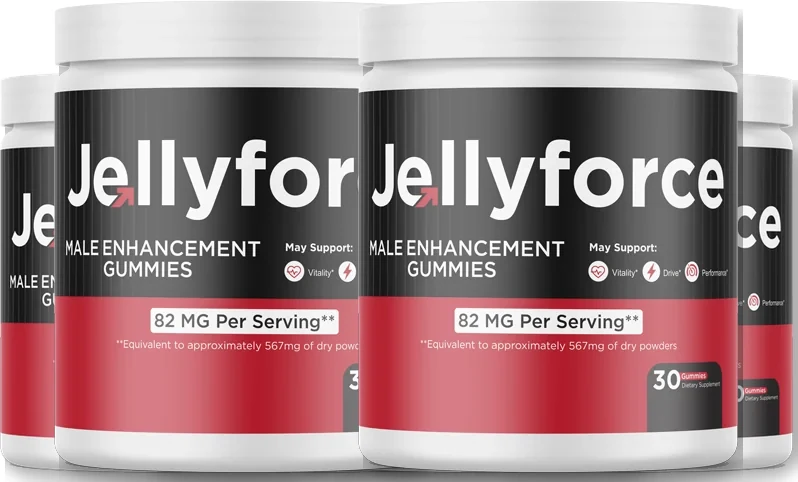
Checking the Jelly Force label and current price
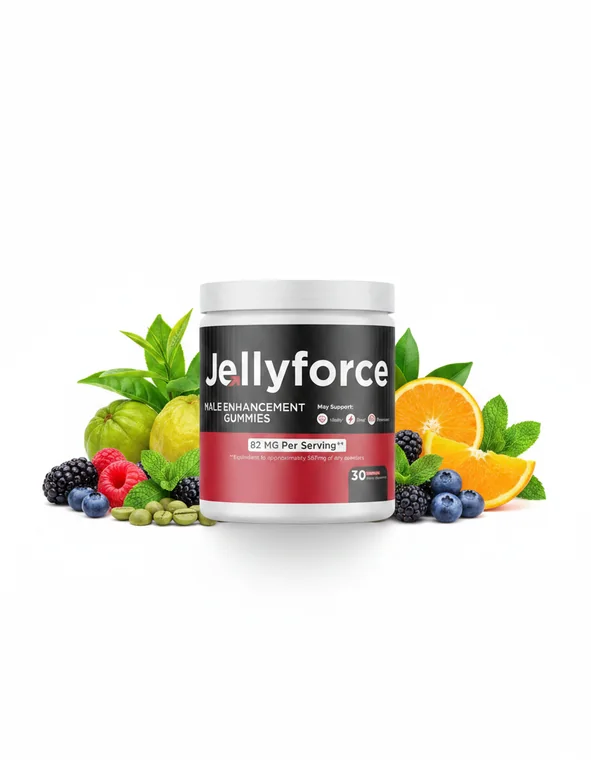
Jelly Force is a botanical gummy rather than a gut formula, and we say plainly on our main Jelly Force page which of its ingredients carry real human evidence and which do not. If you are working out where to buy supplements of this kind without going through a marketplace reseller, the official store is the page to read.
See The Official StorePrebiotics, synbiotics and the rest of the shelf
Probiotics are living organisms. Prebiotics are the fibres those organisms ferment, most commonly galacto-oligosaccharides, fructo-oligosaccharides or inulin. Synbiotics combine the two in one product. Postbiotics, the newest marketing term of the group, refers to inactivated organisms or their metabolites.
The prebiotic literature relevant to skin is mostly about infant formula, and it is inconsistent. The synbiotic trials in children are small and preliminary. The postbiotic category is too young to have a meaningful outcome literature at all, which has not stopped it appearing in advertising as though it were the settled next generation.
There is a plainer point underneath all of this. Ordinary dietary fibre from vegetables, legumes, whole grains and fruit feeds the same organisms that prebiotic supplements feed, at doses no capsule reaches, and most people eat substantially less of it than dietary guidance suggests. Nothing on a supplement shelf competes with fixing that first.
The strongest claim the current evidence supports is a negative one: for eczema that already exists, a gut supplement is unlikely to change your symptoms in a way you would notice. That is not a fashionable thing to publish, but it is what the pooled trials say.
What this cannot do, stated plainly
This is the section most pages in this category leave out, so here it is without hedging.
- No dietary supplement treats, cures or prevents eczema or any other disease. That is not a legal formality being recited. It is also what the outcome data support.
- A supplement is not a substitute for a clinician’s plan. Emollients, prescribed topical therapy, trigger identification and, where relevant, allergy assessment are the basis of care. Nothing here displaces any of it.
- Personal trials are hard to read. Eczema flares and settles by itself, seasonally and with stress. Start a supplement during a flare, watch it settle as it was going to anyway, and you will credit the capsule. This is how almost every gut supplement conviction is formed.
- Product-level evidence usually does not exist. Trials test strains at defined doses. Finished blends are rarely tested as sold, so the honest statement about most products is that they have not been studied.
- Safety is not automatic. Live-organism supplements are well tolerated by most healthy adults, but people who are severely immunocompromised, critically ill, or have central venous access should not take them without medical advice.
The same discipline applies to any ingredient claim, which is why we run the same check on individual botanicals elsewhere on this site — our piece on ashwagandha evidence and the liver signal is the clearest example of an ingredient with better trial support than most and a documented safety issue that marketing omits.
How to read a gut supplement label without being sold to
Four checks, in order of how much they tell you.
- Is a full strain designation printed? Genus, species and strain code. If the third part is missing, the product cannot point to any specific trial.
- Is the count guaranteed through the expiry date, or only at manufacture? Live organisms die in storage. At manufacture is the weaker of the two statements and the more common one.
- Does the amount resemble the studied range? Probiotic trials commonly report daily counts in the billions of colony-forming units. Prebiotic fibre trials work in grams. A gummy holding a few hundred milligrams of total actives is not delivering a gram-scale fibre dose, and no amount of design work changes that arithmetic.
- What is the claim doing? Support and may help are structure-function language. Anything stronger than that on a supplement page is a claim the seller is not entitled to make.
Those four questions will do more for you than any comparison of the best gut health supplement for bloating or for skin, because they are the questions the comparison articles skip.
If you decide to try one anyway
Plenty of people will, and there is no reason to be sniffy about it. Do it in a way that produces information rather than a story.
Pick a product printing a full strain designation, ideally one that appears in published human trials. Give it eight to twelve weeks, because that is the length most published studies run and anything shorter is guesswork. Change one thing at a time; starting three supplements the same week guarantees you learn nothing. Keep a simple weekly note of itch and sleep rather than relying on memory, which reliably rewrites itself in favour of whatever you spent money on. Tell your clinician what you are taking, particularly if you are on immunosuppressant therapy for your skin.
And set the expectation honestly before you start. Everything the gut health supplements eczema literature currently supports points the same way: based on the pooled evidence, the most likely outcome is no clear change. If that outcome would make the purchase feel wasted, the purchase is probably not worth making.
See the current Jelly Force price
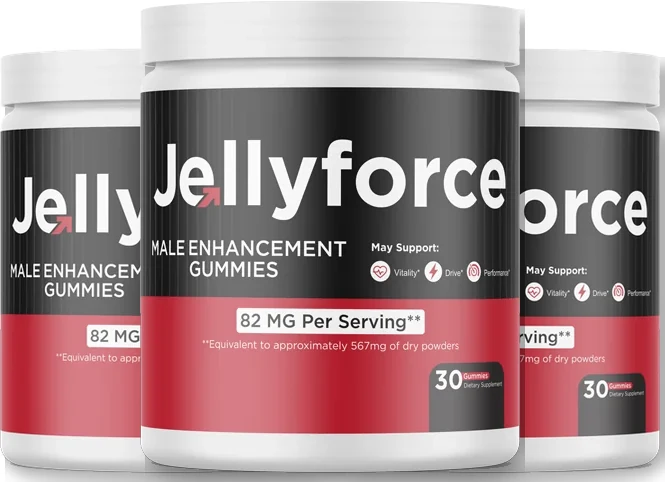
Official store pricing, free US shipping on 3 and 6 bottles, 60-day money-back guarantee. We publish what each named ingredient has and has not been shown to do.
Order NowFrequently asked questions
Do gut health supplements help eczema?
For eczema that is already established, pooled analyses of probiotic supplements have generally found little or no meaningful improvement in symptom scores compared with placebo. The research is not encouraging, and no supplement is a treatment for any skin condition. Emollients and the plan agreed with a clinician remain the basis of care.
Which probiotic strain has the most eczema research behind it?
Lactobacillus rhamnosus GG has the longest research history in early-life atopic dermatitis trials, and several Lactobacillus and Bifidobacterium strains have been studied since. Results differ between strains and between trials, which is exactly why a label that names only a genus tells you almost nothing useful.
Is early-life prevention research the same as treatment evidence?
No, and conflating the two is the most common error in supplement marketing. Prevention trials give specific strains to mothers in late pregnancy and to infants, then count later diagnoses. Treatment trials give supplements to people who already have eczema and measure severity. A result in the first does not transfer to the second.
How long would a fair trial of a gut supplement take?
Most published studies run eight to twelve weeks, so judging anything inside a fortnight is judging noise. Eczema also flares and settles on its own, which means a short personal test is very easy to misread in either direction.