Natural GLP-1 Boosters Explained: What Natural GLP-1 Supplements Really Do
Do natural GLP-1 supplements actually work?
Natural GLP-1 supplements can gently nudge your body's own GLP-1 through ingredients like berberine, green tea, ginger, curcumin, and gut-friendly fibres and probiotics. The effect is modest and food-based, not drug-strength. Used alongside protein, fibre and daily movement, they are a sensible assist rather than a replacement for medical care.
- Best-evidenced nudges: berberine, green tea catechins, and soluble fibre that feeds short-chain fatty acids.
- Realistic size: a gentle appetite and blood-sugar assist, not a Wegovy-level result.
- Safety first: check interactions and speak to a clinician if you take any medication.
If you have typed "natural GLP-1 supplements" into a search bar in the last year, you have met the hype already. Every second wellness reel now promises a "natural Ozempic" in a gummy, a capsule, or a scoop of green powder. The pitch is seductive because the biology it borrows is real: GLP-1 is a genuine appetite hormone, and the drugs that mimic it genuinely work. The gap the marketing quietly steps over is the distance between nudging your own hormone with food-derived compounds and injecting a pharmaceutical-grade agonist at a pharmaceutical dose. This article closes that gap honestly.
What GLP-1 is, and why weight-loss marketing loves it
GLP-1 stands for glucagon-like peptide-1, a hormone released by specialised L-cells in the lining of your small intestine and colon whenever food arrives. It does three useful things at once. It tells the pancreas to release insulin in step with a meal, which steadies blood sugar. It slows the rate at which your stomach empties, so a meal feels present for longer. And it signals the appetite centres in the brain that you have eaten, which turns down hunger and the background hum of food-seeking thoughts. That last effect is why people on GLP-1 medicines describe "food noise" simply going quiet.
Drugs like semaglutide and tirzepatide are GLP-1 receptor agonists: engineered molecules that lock onto the same receptor and stay there far longer than the natural hormone, which is broken down within minutes. That durability, delivered by injection at a defined dose, is what produces the large, sustained appetite reduction seen in trials. Any honest discussion of natural GLP-1 supplements has to begin by acknowledging that this is the benchmark being invoked, and that no food-derived compound reaches it.
What natural GLP-1 supplements can and cannot claim
Here is the crucial distinction. The prescription drugs supply the active agonist from the outside. Natural GLP-1 supplements do something gentler and more indirect: they try to coax your own L-cells into secreting a bit more of your own GLP-1, mostly by changing what reaches the lower gut and how your gut bacteria respond to it. Because your natural GLP-1 is cleared from the blood within a couple of minutes by an enzyme called DPP-4, even a real secretion boost is short-lived. That single fact of biology is the ceiling on the whole category, and it is why responsible copy says "support" rather than "replace".
So a fair claim for a natural GLP-1 supplement is that it may support healthy appetite regulation and blood-sugar steadiness as part of a broader routine. An unfair claim is that it works "like Ozempic", melts fat, or produces double-digit weight loss on its own. When you see the second kind of language, the seller has crossed from biology into fiction, and no dietary supplement is permitted to promise it.
The ingredients with a genuine GLP-1 signal
Strip away the branding and a short list of ingredients actually has published human or mechanistic evidence pointing at GLP-1. None is a blockbuster on its own; together they explain why the category exists at all.
Berberine. This is the most talked-about of the lot, and with some cause. Berberine can stimulate GLP-1 release from intestinal L-cells and it activates AMPK, a cellular energy sensor that improves how the body handles glucose. Human weight-loss trials are modest, in the region of a one to three percent reduction, but the mechanism is not imaginary. If you want the trial numbers in detail, our companion piece on what the berberine weight-loss trials actually show lays them out without rounding up.
Green tea catechins. The polyphenol EGCG and the caffeine that travels with it have been linked to modest increases in fat oxidation and, in some work, to GLP-1 and satiety signalling via the gut. The weight effect on its own is small, but green tea earns its place because the mechanism is plausible and the safety profile at food-like doses is reassuring.
Ginger. Ginger has appetite and gastric-motility effects and some evidence for improving glycaemic markers. Its GLP-1 link is more preliminary than berberine's, but it belongs on the shortlist of botanicals that plausibly nudge the same system.
Curcumin. The active pigment in turmeric has anti-inflammatory activity and early signals for GLP-1 secretion and better insulin sensitivity. Its Achilles heel is absorption, so the form and any absorption enhancer matter more than the headline milligram number.
Probiotics and soluble fibre. This is the mechanism most people underrate. When soluble, fermentable fibre reaches the colon, resident bacteria ferment it into short-chain fatty acids such as butyrate and propionate, and those directly trigger L-cells to release GLP-1 and its cousin PYY. So a good probiotic strain plus a fibre it can feed is arguably a more physiological "GLP-1 booster" than any single exotic extract.

Where the "natural Ozempic" hype outruns the evidence
Two things are true at once, and the marketing only ever tells you one of them. It is true that these ingredients touch the GLP-1 system. It is also true that the effect sizes are small, short-lived, and easily swamped by diet and sleep. Many products sold as "GLP-1 supplements" contain no ingredient with any demonstrated GLP-1 activity at all; they simply borrow the acronym because it sells. Others contain a credible ingredient at a dusting far below any studied dose, so the label reads well and the capsule does little.
There is also a measurement problem. GLP-1 is notoriously hard to measure in a way that translates to fat loss, so a study showing a compound "increases GLP-1" in a test tube or a blood draw does not mean it produces meaningful weight change on the scale. The honest sentence, printed nowhere on the front of the bottle, is that natural GLP-1 supplements are a gentle assist whose ceiling is set by your own physiology, and that the person who also fixes protein, fibre, movement and sleep will get more from them than the person hoping the capsule does the work.
A botanical gummy built on the credible shortlist
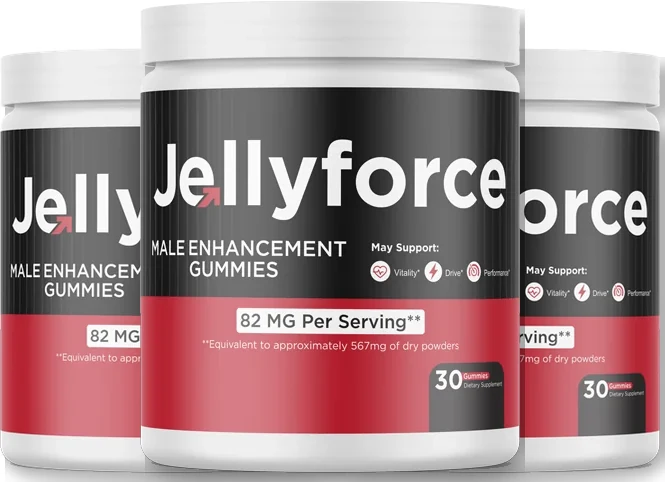
Jelly Force is a daily botanical gummy formulated around the same food-derived ingredients discussed here, dosed for appetite and metabolism support rather than drug-sized promises. The official store publishes the current pricing, the full label and the guarantee terms in one place.
See The Official StoreThree myths worth retiring before you buy
Myth one: a natural GLP-1 supplement replaces the drug. It does not, and the biology explains why. The drugs supply a long-acting agonist; the supplements coax a short-lived pulse of your own hormone. If a clinician has prescribed a GLP-1 medicine for a genuine indication, a gummy is not a substitute for it, and no honest page should imply otherwise.
Myth two: more milligrams equals more effect. Above the studied range, berberine and green tea do not keep scaling; they mostly add side effects. Berberine in particular tends to cause cramping and loose stools when pushed, and very high green tea extract doses have their own cautions. The dose that matches the trials beats the dose that impresses on a label.
Myth three: because it is natural, it is automatically safe with everything. Berberine is a real modulator of drug metabolism and can amplify blood-sugar-lowering medication; ginger and green tea interact with some blood thinners. "Natural" describes the origin, not the interaction profile. The way to curb cravings without Ozempic safely still runs through your clinician if you take anything else.
How to use natural GLP-1 supplements sensibly
Treat the supplement as the smallest lever, not the main one. The mechanisms above all work better on top of a diet your gut and hormones can respond to. Front-load protein, because protein itself is one of the strongest natural stimulants of GLP-1 and satiety. Eat the soluble, fermentable fibre that your gut bacteria turn into the short-chain fatty acids that trigger L-cells, and give a probiotic something to actually ferment. Walk after meals, protect your sleep, and give any regimen a fair eight-to-twelve-week window before you judge it, because appetite hormones respond to habits over weeks, not to a single dose.
If you do add a product, read the label the way you would read a contract. Is each active ingredient listed at a dose you can trace to a study, or hidden inside a proprietary blend? Is the claim structure-function language such as "supports healthy appetite", or an over-the-line promise to "burn fat"? Does the brand publish third-party testing? These checks sort the credible from the costume jewellery faster than any influencer ranking, and they apply just as well to a capsule as to a gummy.
Jelly Force sits in the honest end of this category on purpose: a daily botanical gummy that leans on the food-derived ingredients with a plausible GLP-1 or satiety mechanism, dosed for gentle appetite and metabolism support and sold with plain language about what a supplement can and cannot do. If you want the ingredient-by-ingredient reasoning, the full Jelly Force ingredients breakdown shows which components carry human evidence and which are there for taste and stability.
Related reading
See the current Jelly Force price
Official store pricing, free US shipping on 3 and 6 bottles, and a 60-day money-back guarantee. We publish the label arithmetic next to the ingredient evidence so you can decide with your eyes open.
Order NowFrequently asked questions
What supplements naturally boost GLP-1?
Several fermentable and polyphenol-rich ingredients have shown GLP-1 signals in research: berberine, curcumin from turmeric, ginger, green tea catechins, and certain probiotic strains and soluble fibres that feed short-chain-fatty-acid-producing gut bacteria. The effects are real in studies but generally modest, and no supplement matches a prescription GLP-1 medicine.
Do natural GLP-1 boosters work like Ozempic?
No. Ozempic and Wegovy deliver a potent GLP-1 receptor agonist at a pharmaceutical dose and produce large, well-documented weight change. Natural GLP-1 supplements nudge your own GLP-1 output modestly through food-based mechanisms. Expect a gentle assist to appetite and blood-sugar steadiness, not a drug-sized result.
Is berberine a real GLP-1 booster?
Berberine does have a plausible mechanism: it can stimulate GLP-1 release from intestinal L-cells and activates the AMPK energy pathway. Human weight-loss data show roughly a 1 to 3 percent reduction, similar to metformin and far below GLP-1 drugs. It is one of the better-evidenced natural options, not a miracle.
Are natural GLP-1 supplements safe?
For most healthy adults the individual ingredients are well tolerated, but berberine can interact with medications, ginger and green tea affect some blood thinners, and none are studied for long-term use at high doses. Anyone pregnant, nursing, on prescription medication, or managing a health condition should consult a clinician before starting.