Jelly Force Official Website › How It Works
How It WorksHow Does Jelly Force Work? The Three Routes On The Label
Jelly Force works, on paper, by three different kinds of route, and they are not equally well evidenced.
L-arginine has a named biochemical step, and horny goat weed acts further along it in laboratory work. Ashwagandha has a stress and hormone literature. Muira puama, catuaba, maca and tribulus arrive through traditional use, and only maca and tribulus carry randomised human trials. Caffeine, at 5 mg, is the one quick-acting name.
This page separates the mechanism from the result, because a route is a hypothesis about what could happen and a trial is a record of what did.
Route one: the nitric oxide pathway in Jelly Force
L-arginine is a semi-essential amino acid and the substrate for nitric oxide synthase. Nitric oxide diffuses into the smooth muscle of a blood vessel wall, raises cyclic GMP, and the muscle relaxes. A relaxed vessel wall is a wider vessel, and wider vessels carry more blood. That chain is textbook physiology rather than a marketing claim, and it is the same chain a prescription phosphodiesterase inhibitor acts on, one step further downstream.
The evidence that supplementing the substrate moves an outcome is real and it is bounded. Ten randomised trials in 540 men with mild to moderate erectile difficulty were pooled in 2019 (Rhim 2019). Arginine beat placebo with an odds ratio of 3.37, improved the overall satisfaction, intercourse satisfaction, orgasmic function and erectile function subdomains of the IIEF, and left the sexual desire subdomain unchanged. Adverse effects ran at 8.3 per cent against 2.3 per cent on placebo, none severe.
The 2024 network meta-analysis put the same ingredient in context. Across fifteen randomised trials in 1,000 men, L-arginine ranked above every other nutraceutical tested except a carnitine pair, and its clearest use was alongside a prescription rather than instead of one (Barbonetti 2024). The doses in that literature were 1,500 mg to 5,000 mg a day.
Horny goat weed belongs on the same route, one step later. The signal nitric oxide starts is ended by an enzyme, PDE-5, and prescription tablets for erectile dysfunction work by blocking it. Icariin, the marker compound in horny goat weed, blocks it too in laboratory tests, though it needed about eighty times sildenafil’s concentration for the same effect (Dell'Agli 2008), and it kept cGMP raised in cavernous smooth muscle cells (Ning 2006). That is a mechanism in a dish, not a result in a person: no randomised trial of the herb on its own turns up in PubMed.
Route two: the adaptogenic pathway in Jelly Force
Ashwagandha has one of the larger trial literatures on this panel, and most of that study is about stress rather than about sex. Nine randomised trials in 558 people were pooled in 2024 and found a consistent effect on the Perceived Stress Scale, on the Hamilton Anxiety Scale and on serum cortisol (Arumugam 2024).
The men's trial worth knowing is a sixteen-week crossover in overweight men aged 40 to 70 with mild fatigue, given an extract delivering 21 mg of withanolide glycosides a day for eight weeks (Lopresti 2019). Against placebo it measured an 18 per cent greater rise in DHEA-S and a 14.7 per cent greater rise in testosterone. It also measured fatigue, vigour and sexual wellbeing, and found no statistically significant difference between the groups on any of them. Both halves of that result belong on a page like this one.
A separate review of ashwagandha in male infertility pooled four clinical studies and reported improvements in semen parameters and hormone profile, while stating in its own conclusion that the data are too limited to be robust (Durg 2018). That is a fair summary of where this ingredient sits: promising, consistent, and not yet decisive.
Route three: the traditional-use names on Jelly Force
Four of the nine names are on the panel because people have used them for a long time, which is a real reason and a weak one. Traditional use tells you a plant was available, tolerated and believed to work. It does not tell you which of those three explains its reputation.
Maca is the exception and deserves separating from the other two. A twelve-week randomised trial in healthy men aged 21 to 56 found self-reported sexual desire improving from week eight at both 1,500 mg and 3,000 mg a day, and the authors went looking for the explanation: serum testosterone and oestradiol did not differ from placebo, and logistic regression showed the effect was independent of the Hamilton depression and anxiety scores too (Gonzales 2002). A second trial in fifty men with mild erectile difficulty gave 2,400 mg of dry extract for twelve weeks and measured a larger IIEF-5 gain than placebo (Zenico 2009).
Muira puama and catuaba have neither. The Brazilian review that compiled seventy-four species used for this purpose lists fourteen with pharmacological study behind them; Trichilia catigua is on that list and Ptychopetalum olacoides is not (Teixeira 2024). What exists for muira puama is mouse work, including an anti-stress study at 100 to 300 mg per kilo (Piato 2010), and a body of chemistry.
Tribulus is the other exception, and the advertising leaves it off. In 180 men with mild or moderate erectile difficulty, 1,500 mg a day of a standardised dry extract for twelve weeks raised IIEF scores more than placebo, with no difference in side effects (Kamenov 2017). A month at 800 mg a day made no difference (Santos 2014), and eight studies pooled in 2026 kept the questionnaire gain while total testosterone stayed where it was (Suharyani 2026). Whatever tribulus does in those trials, raising testosterone is not it; a 2005 trial in young men had already found no change in testosterone, androstenedione or LH (Neychev 2005).
What the caffeine and green tea add to Jelly Force
Two names on the panel act on alertness rather than on anything the roundels describe. Caffeine is listed at 5 mg, the only figure the label gives any one name. MedlinePlus puts a 6-ounce cup of brewed coffee at 75 to 100 mg, so a gummy carries about what half an ounce of dark chocolate does.
Green tea extract brings catechins and, usually, some caffeine of its own, in proportions that vary by maker; of nineteen green tea supplements analysed in 2006, seven stated their caffeine at all (Seeram 2006). On this label the extract sits inside the blend’s unsplit share. Neither name has a trial behind it for vitality. They are on this page because they are on the panel, and because anybody avoiding stimulants needs to know they are there.
Where the Jelly Force mechanism stops being a mechanism
Every route above was established at an amount. The nitric oxide route was demonstrated at 1,500 mg to 5,000 mg of arginine a day. The adaptogen route was demonstrated at an extract standardised to 21 mg of withanolide glycosides. The maca route was demonstrated at 1,500 mg to 3,000 mg, and the tribulus route at 1,500 mg of dry extract.
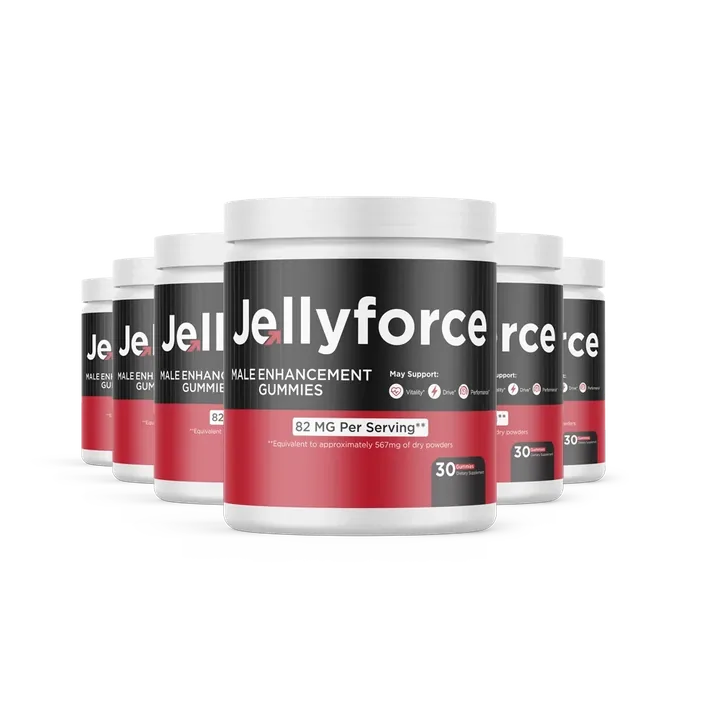
This panel gives 82 mg a gummy across nine names, 5 mg of it caffeine. The other eight share 77 mg, so even the largest possible share is about a twentieth of the smallest of those trial amounts. A route shown to work at one amount is not evidence about a twentieth of it, and this website does not treat it as though it were. What the bottle can reasonably be judged on is a daily habit over two months, which is the length the research itself ran.
The mechanisms are real; the amounts on this label are much smaller than the ones those mechanisms were demonstrated at, and the amount table sets the two side by side.
What would have to be true for Jelly Force to work as advertised
It is a useful exercise to run backwards. For this bottle to do what its roundels say, at least one of four things would need to hold.
One: the extracts are concentrated far beyond what the trials used, so that 82 mg of extract carries the activity of grams of root. The footnote points that way, at roughly seven to one: 567 mg of starting material behind 82 mg. For the whole blend to stand in for the 1,500 mg of maca root in the smallest trial arm, with nothing else in it, the ratio would need to be about eighteen to one.
Two: the nine work together, so that a small amount of each adds up to more than the sum of the parts. That claim is common in this category and has almost nothing behind it. The 2024 network meta-analysis found combinations outperforming single agents only where one of the components was a prescription drug (Barbonetti 2024).
Three: the outcomes people notice are more sensitive than the outcomes trials measure. Plausible, unmeasurable, and precisely the reason placebo arms exist.
Four: the routine itself does some of the work. Taking something every morning for a purpose changes attention and often changes the behaviour around it, and that is not nothing even when it is not pharmacology.
This desk finds the fourth the most defensible and the second the least. Neither belief belongs on a product label, which is why it is written here instead.
Sources behind this Jelly Force page
Every source below was pulled from PubMed by identifier and checked against the retraction index before it was printed here.
- Gonzales GF, Cordova A, Vega K, et al. Effect of Lepidium meyenii (MACA) on sexual desire and its absent relationship with serum testosterone levels in adult healthy men. Andrologia. 2002;34(6):367-72. PMID 12472620. https://pubmed.ncbi.nlm.nih.gov/12472620/
- Zenico T, Cicero AF, Valmorri L, Mercuriali M, Bercovich E. Subjective effects of Lepidium meyenii (Maca) extract on well-being and sexual performances in patients with mild erectile dysfunction: a randomised, double-blind clinical trial. Andrologia. 2009;41(2):95-9. PMID 19260845. https://pubmed.ncbi.nlm.nih.gov/19260845/
- Teixeira TM, Boeff DD, de Oliveira Carvalho L, Ritter MR, Konrath EL. The traditional use of native Brazilian plants for male sexual dysfunction: Evidence from ethnomedicinal applications, animal models, and possible mechanisms of action. J Ethnopharmacol. 2024;318(Pt A):116876. PMID 37437795. https://pubmed.ncbi.nlm.nih.gov/37437795/
- Piato AL, Detanico BC, Linck VM, Herrmann AP, Nunes DS, Elisabetsky E. Anti-stress effects of the 'tonic' Ptychopetalum olacoides (Marapuama) in mice. Phytomedicine. 2010;17(3-4):248-53. PMID 19682881. https://pubmed.ncbi.nlm.nih.gov/19682881/
- Lopresti AL, Drummond PD, Smith SJ. A Randomized, Double-Blind, Placebo-Controlled, Crossover Study Examining the Hormonal and Vitality Effects of Ashwagandha (Withania somnifera) in Aging, Overweight Males. Am J Mens Health. 2019;13(2):1557988319835985. PMID 30854916. https://pubmed.ncbi.nlm.nih.gov/30854916/
- Durg S, Shivaram SB, Bavage S. Withania somnifera (Indian ginseng) in male infertility: An evidence-based systematic review and meta-analysis. Phytomedicine. 2018;50:247-256. PMID 30466985. https://pubmed.ncbi.nlm.nih.gov/30466985/
- Arumugam V, Vijayakumar V, Balakrishnan A, et al. Effects of Ashwagandha (Withania somnifera) on stress and anxiety: A systematic review and meta-analysis. Explore (NY). 2024;20(6):103062. PMID 39348746. https://pubmed.ncbi.nlm.nih.gov/39348746/
- Rhim HC, Kim MS, Park YJ, et al. The Potential Role of Arginine Supplements on Erectile Dysfunction: A Systemic Review and Meta-Analysis. J Sex Med. 2019;16(2):223-234. PMID 30770070. (Erratum: J Sex Med. 2020;17(3):560.) https://pubmed.ncbi.nlm.nih.gov/30770070/
- Barbonetti A, Tienforti D, Antolini F, et al. Nutraceutical interventions for erectile dysfunction: a systematic review and network meta-analysis. J Sex Med. 2024;21(11):1054-1063. PMID 39279185. https://pubmed.ncbi.nlm.nih.gov/39279185/
- Kamenov Z, Fileva S, Kalinov K, Jannini EA. Evaluation of the efficacy and safety of Tribulus terrestris in male sexual dysfunction - A prospective, randomized, double-blind, placebo-controlled clinical trial. Maturitas. 2017;99:20-26. PMID 28364864. https://pubmed.ncbi.nlm.nih.gov/28364864/
- Santos CA Jr, Reis LO, Destro-Saade R, Luiza-Reis A, Fregonesi A. Tribulus terrestris versus placebo in the treatment of erectile dysfunction: A prospective, randomized, double blind study. Actas Urol Esp. 2014;38(4):244-8. PMID 24630840. https://pubmed.ncbi.nlm.nih.gov/24630840/
- Neychev VK, Mitev VI. The aphrodisiac herb Tribulus terrestris does not influence the androgen production in young men. J Ethnopharmacol. 2005;101(1-3):319-23. PMID 15994038. https://pubmed.ncbi.nlm.nih.gov/15994038/
- Suharyani S, Amanda B, Angellee J, William W, Hariyanto TI, I'tishom R. Tribulus terrestris for management of patients with erectile dysfunction: a systematic review and meta-analysis of randomized trials. Int J Impot Res. 2026;38(1):11-18. PMID 40360723. https://pubmed.ncbi.nlm.nih.gov/40360723/
- Dell'Agli M, Galli GV, Dal Cero E, et al. Potent inhibition of human phosphodiesterase-5 by icariin derivatives. J Nat Prod. 2008;71(9):1513-7. PMID 18778098. https://pubmed.ncbi.nlm.nih.gov/18778098/
- Ning H, Xin ZC, Lin G, Banie L, Lue TF, Lin CS. Effects of icariin on phosphodiesterase-5 activity in vitro and cyclic guanosine monophosphate level in cavernous smooth muscle cells. Urology. 2006;68(6):1350-4. PMID 17169663. https://pubmed.ncbi.nlm.nih.gov/17169663/
- Seeram NP, Henning SM, Niu Y, Lee R, Scheuller HS, Heber D. Catechin and caffeine content of green tea dietary supplements and correlation with antioxidant capacity. J Agric Food Chem. 2006;54(5):1599-603. PMID 16506807. https://pubmed.ncbi.nlm.nih.gov/16506807/
- MedlinePlus Medical Encyclopedia. Caffeine in the diet. U.S. National Library of Medicine. https://medlineplus.gov/ency/article/002445.htm
Order Jelly Force on the official website
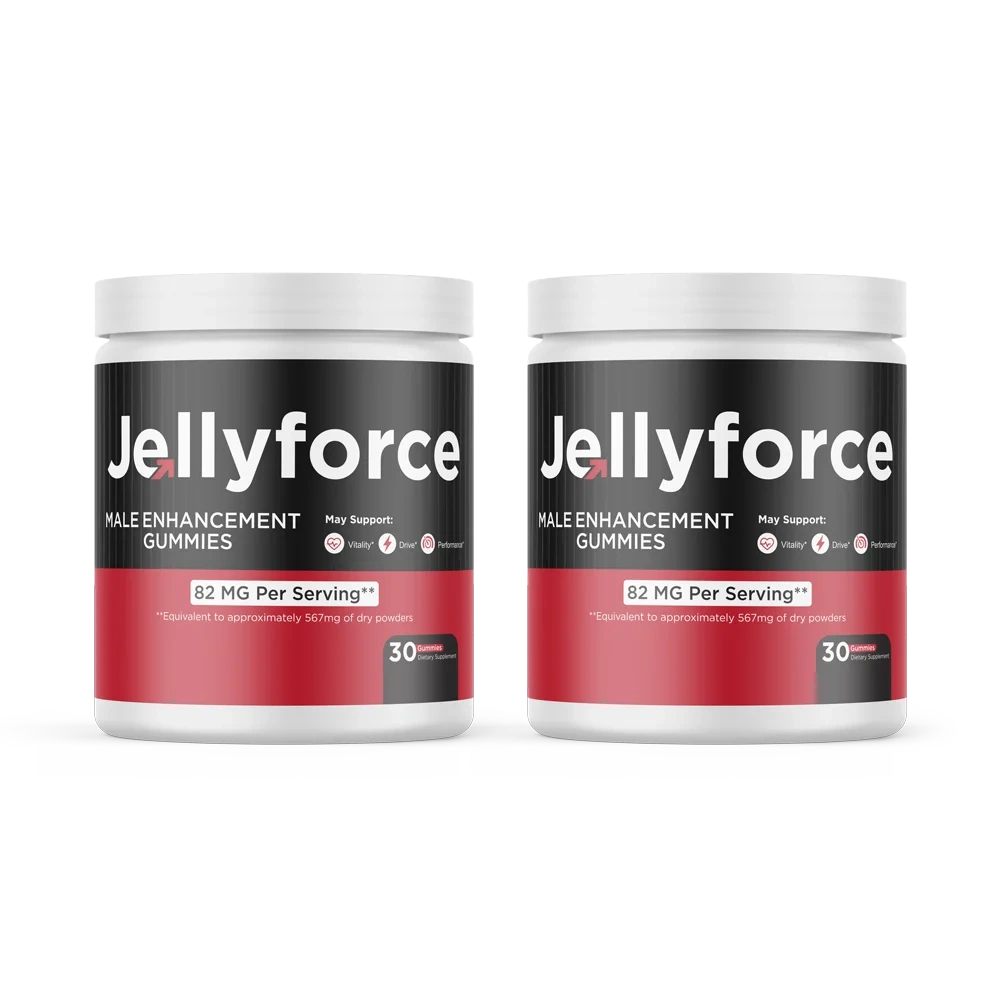
Two, three or six bottles, with sixty days from the date of purchase to change your mind about it.
Two, three or six bottles · price at the seller’s checkout · 60-day money-back guarantee
Order Jelly Force On The Official Website30 gummies a bottle · lot JEL-26/JE-1619 · ships from the U.S.