Jelly Force Official Website › Testing & Quality
Testing & QualityJelly Force Testing And Quality: What The Wrap Prints, Badge By Badge
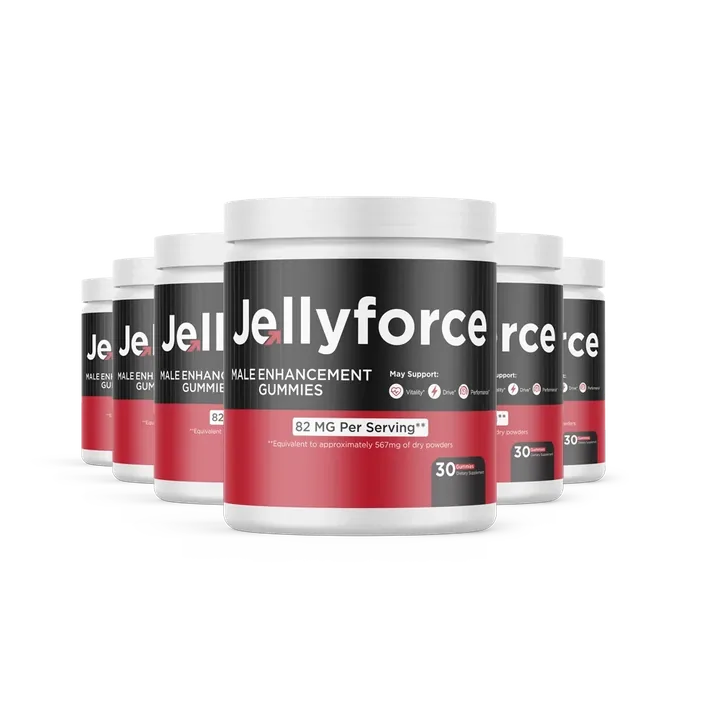
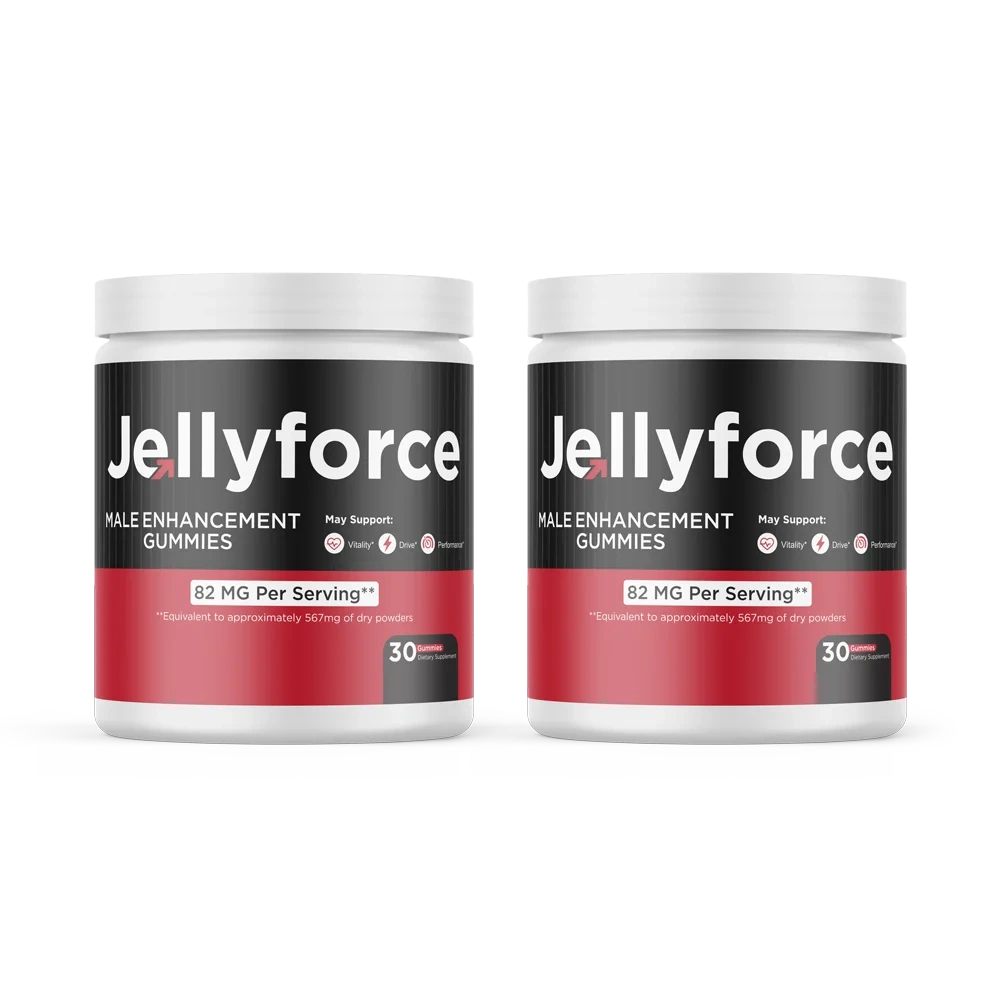
The Jelly Force wrap makes two quality statements of its own: produced in a GMP facility, and made in the USA with globally sourced ingredients.
The ten roundels in the badge row on this website are a general set, not artwork lifted off this bottle, and most of them are printed nowhere on the wrap. This page sets each one against what the wrap and the seller’s page actually say, so a badge is never mistaken for a label claim.
The useful question about a seal is never whether it is there. It is who put it there, what they checked, and whether the bottle says the same thing.
What the Jelly Force wrap itself says about quality
| Printed on the wrap | Where | What it tells a buyer |
|---|---|---|
| Produced in a GMP Facility | Directly under the Supplement Facts panel | The gummies are made to Good Manufacturing Practice. The line names no certifying body and no facility |
| Made in the USA with globally sourced ingredients | Beside a flag, on the left panel | Where the gummies were made, and in the same breath that the ingredients come from elsewhere |
| These statements have not been evaluated by the Food and Drug Administration | In a boxed notice on the left panel | The standard supplement statement. Nothing on the wrap claims FDA approval or FDA registration |
| Do not use if the seal under the cap is broken or missing | In the storage lines above that notice | The one tamper check a buyer can make on arrival, before opening anything |
That is the whole of it. The wrap prints no certification logo, no quality seal and no recipe mark. The seller’s page speaks of stringent testing for purity and potency, names no laboratory and publishes no result, so this desk reads it as a description rather than as evidence.
The ten badges on this website, set against the Jelly Force wrap
 Made in the USABacked by the wrap, which adds that the ingredients are globally sourced.
 GMP certifiedThe wrap says produced in a GMP facility. It names no certifying body.
 FDA-registered facilityNot printed on the wrap. Registration covers a plant and never approves a product.
 GMO freeNot printed on the wrap or the seller’s page. Ask before relying on it.
 Natural ingredientsNot on the wrap, and natural has no regulatory definition here anyway.
 Money backThe seller’s purchase policy, not a quality mark.
 Doctor formulatedNot on the wrap, and no clinician is named anywhere the supplier publishes.
 Gluten freeNot on the wrap. The panel lists no wheat, barley or rye, and no statement.
 Dairy freeNot on the wrap. No milk ingredient appears on the panel.
 VegetarianNot on the wrap. The panel lists apple pectin and no gelatin.
What each kind of Jelly Force mark is actually worth
| Kind of mark | Which ones | What it tells a buyer |
|---|---|---|
| Printed on the wrap | Made in the USA; produced in a GMP facility | The manufacturer’s own statements, on the container the buyer receives. The GMP line names no certifying body |
| An agency register | FDA-registered facility | Not on this wrap. Where a plant is registered, that is an administrative fact about the building, not a judgement about any product |
| Recipe statements | Gluten free, dairy free, vegetarian, GMO free | Not on this wrap or the seller’s page. The panel’s ingredient list is the thing to read instead, and it is printed in full |
| A marketing word | Natural ingredients | No regulatory definition. Treat it as tone rather than as information |
| Nobody's mark | Doctor formulated | Names no clinician, no institution and no qualification anywhere the supplier publishes |
| The seller's policy | Money back | A commercial term, 60 days from purchase, and a real one. It is not a quality claim |
The Jelly Force badge this desk would drop
Doctor formulated. It is the only badge in the row that asserts a person and then names none, and it is not printed on the wrap.
There is no clinician identified anywhere the supplier publishes, no institution, no qualification and no statement of what they contributed. That is not unusual in this category and it is not, on its own, evidence of anything improper. It is simply a mark that carries no information, sitting beside marks that do.
This website does not repeat it as a reason to buy, and it does not appear in any claim anywhere else on the site. It is discussed here because it sits in the badge set a reader will see, and the most useful thing a retail desk can do with a mark like that is say what it is.
What testing Jelly Force would actually involve
Worth spelling out, because the phrase third-party tested is used loosely across this category.
An identity test establishes which species is in the bottle. For catuaba that is the whole question: fourteen commercial preparations examined in Vienna produced a majority containing material other than the bark their labels named (Kletter 2004). Identity testing is done by microscopy, by chromatographic fingerprint or by DNA methods, and none of it is expensive.
A potency assay measures how much of a marker compound is present, which is the figure this bottle does not publish. A contaminant panel covers heavy metals, pesticides and microbial load. An adulterant screen looks for the thing that actually hurts people in this aisle, which is a synthetic drug analogue (Kee 2018).
This desk holds a certificate reference on file and has commissioned none of the above. Saying that plainly is worth more than implying otherwise, and a reader who wants assay data should ask the manufacturer for it directly.
Reading a seal wall on any bottle, not only on Jelly Force
A few questions turn a row of roundels back into information, and they work on every product in this aisle.
Is it on the container? A badge in an advert or on a website is not the same statement as a line printed on the bottle, which is the one a manufacturer answers for. On this product the wrap backs two badges and is silent on the rest.
Who issues it? A mark with an issuing body behind it can be checked with that body. A mark the manufacturer printed for itself cannot, and most roundels on most supplement bottles are the second kind.
What did they check? GMP certification audits a facility and its procedures. It does not audit what went into a particular bottle, which is a distinction worth holding on to.
Does it name anybody? A mark asserting a profession without naming a person is the weakest kind there is, and the badge row above carries one.
Is it a quality mark at all? A money-back roundel is a commercial term sitting in a row of compliance marks, where it reads as one. It is a good term and it belongs on the guarantee page rather than in that row.
Applied to any bottle, those questions usually reduce a wall of marks to two or three that carry information. That is not a criticism of this product; it is how the category works, and knowing it is worth more than any individual seal.
Gelatin or pectin: what the Jelly Force panel settles on its own
The recipe question most buyers actually have about a gummy is what sets it, and the panel answers it without any badge.
A gummy is built on either gelatin or pectin. Gelatin comes from animal collagen; pectin comes from fruit. This panel lists apple pectin as the gelling agent and no gelatin anywhere. The wrap makes no vegetarian or vegan claim of its own, and natural flavors are not itemised, so a buyer for whom that is a firm rule has one question left to put to the seller. Pectin also behaves differently in the hand: slightly firmer, slightly less prone to fusing in heat, and a cleaner set.
That is the pattern this page keeps finding. The printed ingredient list answers more than the badges do, and it is on the supplement facts page in full.
Two statements printed on the wrap: produced in a GMP facility, and made in the USA with globally sourced ingredients. One commercial term, the seller’s 60-day policy. The rest of the badge row is printed nowhere on the bottle, and one badge names nobody. Read the wrap and the panel before the badges.
Sources behind this Jelly Force page
Every source below was pulled from PubMed by identifier and checked against the retraction index before it was printed here.
- Kletter C, Glasl S, Presser A, et al. Morphological, chemical and functional analysis of catuaba preparations. Planta Med. 2004;70(10):993-1000. PMID 15490329. https://pubmed.ncbi.nlm.nih.gov/15490329/
- Kee CL, Ge X, Gilard V, Malet-Martino M, Low MY. A review of synthetic phosphodiesterase type 5 inhibitors (PDE-5i) found as adulterants in dietary supplements. J Pharm Biomed Anal. 2018;147:250-277. PMID 28903860. https://pubmed.ncbi.nlm.nih.gov/28903860/
- Lee JH, Park HN, Park OR, Kim NS, Park SK, Kang H. Screening of illegal sexual enhancement supplements and counterfeit drugs sold in the online and offline markets between 2014 and 2017. Forensic Sci Int. 2019;298:10-19. PMID 30870700. https://pubmed.ncbi.nlm.nih.gov/30870700/
- U.S. Food and Drug Administration. Sexual Enhancement and Energy Product Notifications. Medication Health Fraud Notifications, Center for Drug Evaluation and Research. https://www.fda.gov/drugs/medication-health-fraud-notifications/sexual-enhancement-and-energy-product-notifications
- National Institutes of Health, Office of Dietary Supplements. Dietary Supplements for Exercise and Athletic Performance: Fact Sheet for Health Professionals. https://ods.od.nih.gov/factsheets/ExerciseAndAthleticPerformance-HealthProfessional/
Order Jelly Force from a desk that names its limits
Every badge on this website is set against what the wrap actually prints, including the ones the bottle does not back.
Two, three or six bottles · price at the seller’s checkout · 60-day money-back guarantee
Order Jelly Force On The Official Website30 gummies a bottle · lot JEL-26/JE-1619 · ships from the U.S.